G'day,
This was the week artificial intelligence (AI) agents got a wallet, a phone and a sharper brain. Here's what my team at Intender and I think it means for your customers, your channels and your budget.
Same format: what happened, so what, and one thing to do about it.
1. ChatGPT gets a wallet: AI agents can now pay
Image: OpenAI
What happened: On 13 November (US time) OpenAI launched ChatGPT Wallet, built with American Express, Chase, Mastercard and Visa. An agent can pay on your behalf using a payment token instead of your real card details, and you approve every purchase with a check like Face ID. It starts with ChatGPT Pro subscribers in the United States. OpenAI's new playbook for businesses says to keep product feeds current, stop firewalls blocking its agents and make sure fraud rules don't decline legitimate agent purchases.
Source: OpenAI
So what? The last step of the buying journey is moving inside the chat. ChatGPT already researches and compares for its 1.2 billion weekly users; now it can close the sale. The sneaky risk is your own security settings quietly turning away a buyer who arrives as a bot. It's US-only for now, but the plumbing is being laid today.
Intender tip: Ask your developer and payments provider two questions this week: does our firewall or bot protection block AI agents, and would our fraud rules decline an agent-made purchase?
2. Google Maps will now ring businesses for your customers

Image: Google
What happened: On 16 November (US time) Google added agentic features to Ask Maps, the AI chat in Google Maps. It can find beauty, pet care, auto and home repair appointments and call local businesses to check availability. Appointment finding launches first in the United States, while Ask Maps itself expands to 30 more European countries. Business Profile already has a setting for automated calls Google makes for customers.
Source: Google · Search Engine Journal
So what? Local search used to end with a click to call. Now Google's AI makes the call and brings back a shortlist. Clunky booking or a phone that rings out keeps you off it.
Intender tip: Audit your Google Business Profile this week: hours, services, booking link and phone number. When this reaches Australia, some calls will come from Google, so brief your front desk.
3. Google's November core update lands, with a reporting glitch
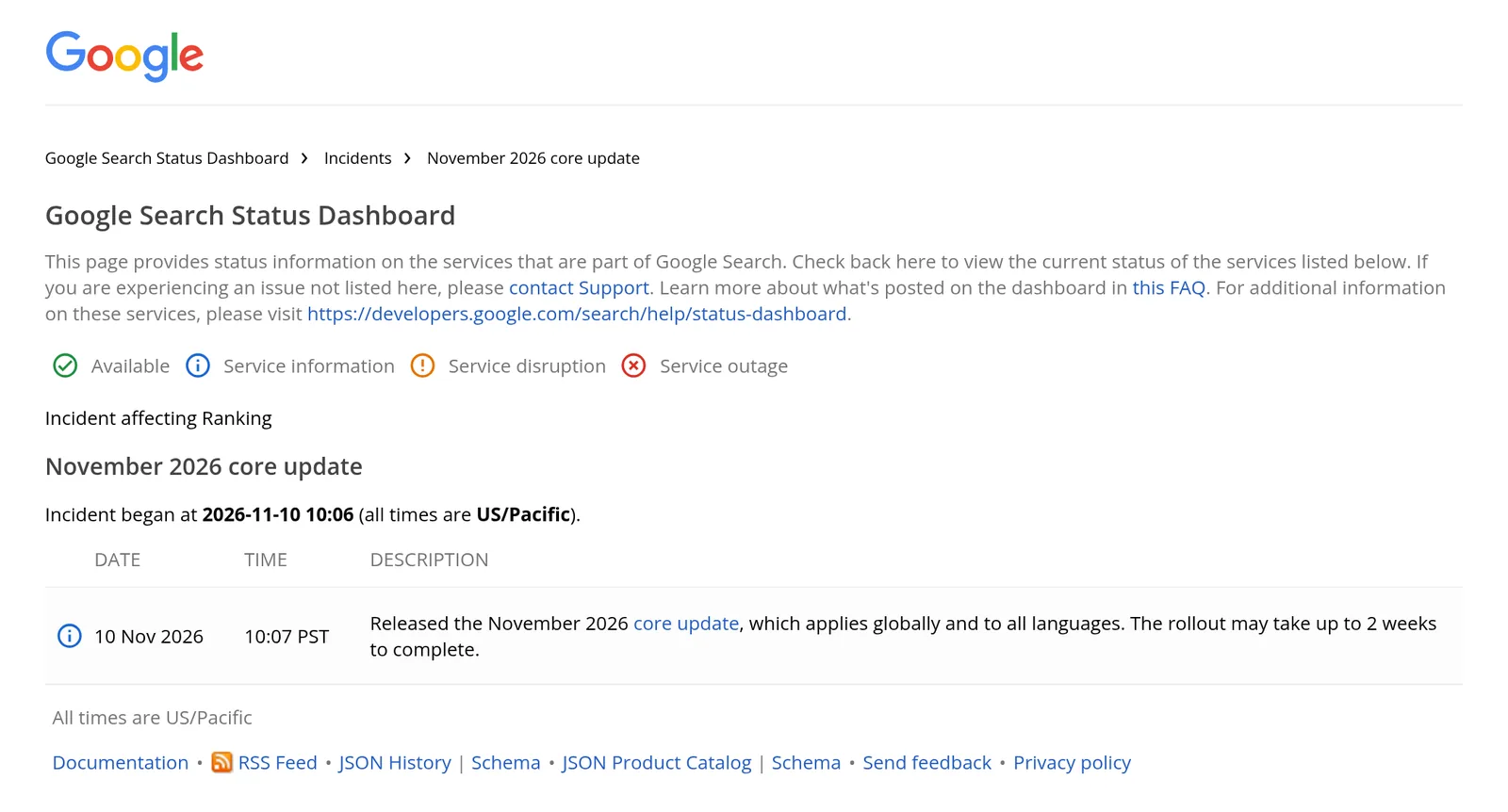
Image: Google Search Status Dashboard
What happened: Google released its November 2026 core update on 10 November (US Pacific time, early 11 November in Australia). It applies globally and may take up to two weeks to roll out. Google also confirmed a logging error that undercounted impressions in Search Console's Generative AI performance report, which covers AI Overviews and AI Mode, for 9 to 11 November. Google says it affects data logging only.
Source: Google Search Status Dashboard · Search Engine Land
So what? A ranking reshuffle and a broken AI visibility chart in the same week can look like the sky is falling when it isn't. Bad data drives bad decisions, especially when someone panics and pulls budget.
Intender tip: Annotate 9 to 11 November in your reports and dashboards now, and don't judge the core update until the rollout is complete.
4. OpenAI and Microsoft drop the price of smart
Image: OpenAI
What happened: On 17 November (US time) OpenAI released GPT-6.2 Astra, its new frontier model, and GPT-6.2 Sol for everyday work. OpenAI says Astra's slides, spreadsheets and documents follow your templates more closely and "read less like AI", and its application programming interface (API) prices are 20% lower than GPT-6 Astra's. The same day, Microsoft released seven new MAI models at its Ignite conference, pitched squarely on price-performance.
Source: OpenAI · Microsoft AI
So what? Top-tier AI is getting better and cheaper at once. The model isn't your advantage; your data, templates and briefs are. If your team shrugged at AI six months ago, test again.
Intender tip: Re-run your three most common AI jobs (a monthly report, ad copy variations, a campaign brief) on the new models using your own templates, and time the difference.
5. APRA puts AI at the centre of financial system risk
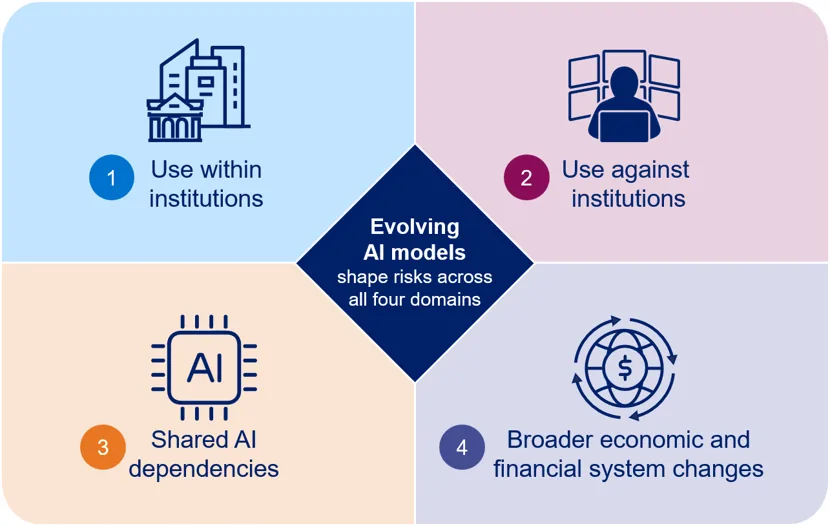
Image: APRA
What happened: On 12 November the Australian Prudential Regulation Authority (APRA) released its System Risk Outlook, warning that AI is accelerating cyber and operational threats and increasing reliance on a small number of "material service providers". Its 2027 stress test will explore how AI-driven economic disruption could hit banks, superannuation funds and life insurers. Chair John Lonsdale told journalists "there will be interruptions, there will be problems."
So what? When the prudential regulator builds a stress test around AI, it's a board conversation, not a marketing one. If you're in financial services, or you sell to banks, insurers or super funds, expect tougher questions about every AI tool and vendor touching customer data.
Intender tip: Ask your marketing technology and agency partners (us included) to document which AI tools touch your customer data, and how your campaigns keep running if one of them goes down.
6. United Airlines tells AI agents to ask first

Image: United Airlines
What happened: On 11 November United Airlines said it is restricting unauthorised third-party AI agents on its website and app, and through travel agencies and aggregators. It cited exposed logins, unintended purchases and check-in rules that need a human. Its updated terms still let search engines index its public pages, but agents need United's written permission, and its data can't be used to train or ground AI models.
Source: United Airlines · Search Engine Journal
So what? Put this next to story one. OpenAI is asking businesses to let agents in; United is asking them to knock. Neither is wrong. Whether an agent can buy from you is a commercial decision about who owns the customer, not a default setting in your bot protection.
Intender tip: Decide your agent policy (welcome, permission only, or blocked), then check that your robots.txt file, website terms and bot protection all say the same thing.
Quick hits
- California sues OpenAI: the Attorney General alleges unsafe model testing, calling July's Hugging Face attack one of at least 80 incidents. California Attorney General
- Branded search, now in the API: Google's Search Analytics API can now split branded and non-branded queries for eligible properties. Search Engine Land
- Microsoft's model price war: its seven new MAI models include MAI Image 2.7, which Microsoft says tops an image editing leaderboard at a fifth of a rival's price. Microsoft AI
- Privacy diary note: from 10 December 2026, organisations covered by the Privacy Act must explain in their privacy policy when a computer program makes or informs decisions that significantly affect people. OAIC
Phil's take: decide who gets through the door
Every story this week gives agents more power: to pay, to phone, to think. So every business now faces the question United answered publicly: who do you let in? I've spent my career chasing intent, the moment someone is ready to buy. More and more, that intent will arrive through an agent working for a human. Block it by accident and you lose a sale you never knew existed. Let everything in without a plan and you hand your customer to a middleman. This isn't an IT call or a marketing call. It's a growth decision for the whole leadership team: how customers find you, book you, pay you and come back. Make it on purpose, with good intentions and better data. Your next best customer might never see your website, so make sure their agent can.
Until next week,
Phil CEO, Intender · Intent marketer
Not sure whether AI agents can find, book or buy from your business? The Intender team will take a look and show you where intent is leaking. Book a Fresh Eyes Audit
About the author: Phil Ohren is founder and CEO of Intender, an Australian intent marketing agency. He has worked with 214 clients and driven $628M+ in results. More from Phil at phillipohren.com. This Week in AI is his weekly read on how AI is changing the way in-market buyers search and decide.