G'day,
This was the week artificial intelligence (AI) got its first proper report card: hard numbers on ChatGPT ads, a survey showing most Australian organisations are still waiting for AI to pay off, and one of our biggest tech success stories hitting reset.
Same format: what happened, so what, and one thing to do about it.
1. ChatGPT ads earn 64% less per visit than Google Search ads
Image: Search Engine Land
What happened: A working paper from researchers at WU Vienna and the Frankfurt School of Finance & Management, covering nearly 1,900 websites, found paid ChatGPT visits in the United States earned US$0.89 per session, against US$2.45 for Google Search ads, and converted at 0.37% versus 1.17%. Separately, Adthena counted 204,489 ChatGPT ad placements between June and September, many on early research questions. It also found Google AI Overviews appearances in Australia grew 536% year on year.
Source: Search Engine Land · Adthena via GlobeNewswire
So what? ChatGPT ads behave like discovery, not last click. The study only tracked revenue from the visit itself, so later purchases may be missing. Judge ChatGPT on last-click return on ad spend (ROAS) and it looks terrible. Judge it on getting you into the conversation earlier, and it might earn its spot.
Do this: Testing ChatGPT ads? Give them their own budget line and measure revenue per visit and branded search lift, not just cost per click.
2. Google hands your brand's description to an AI side panel
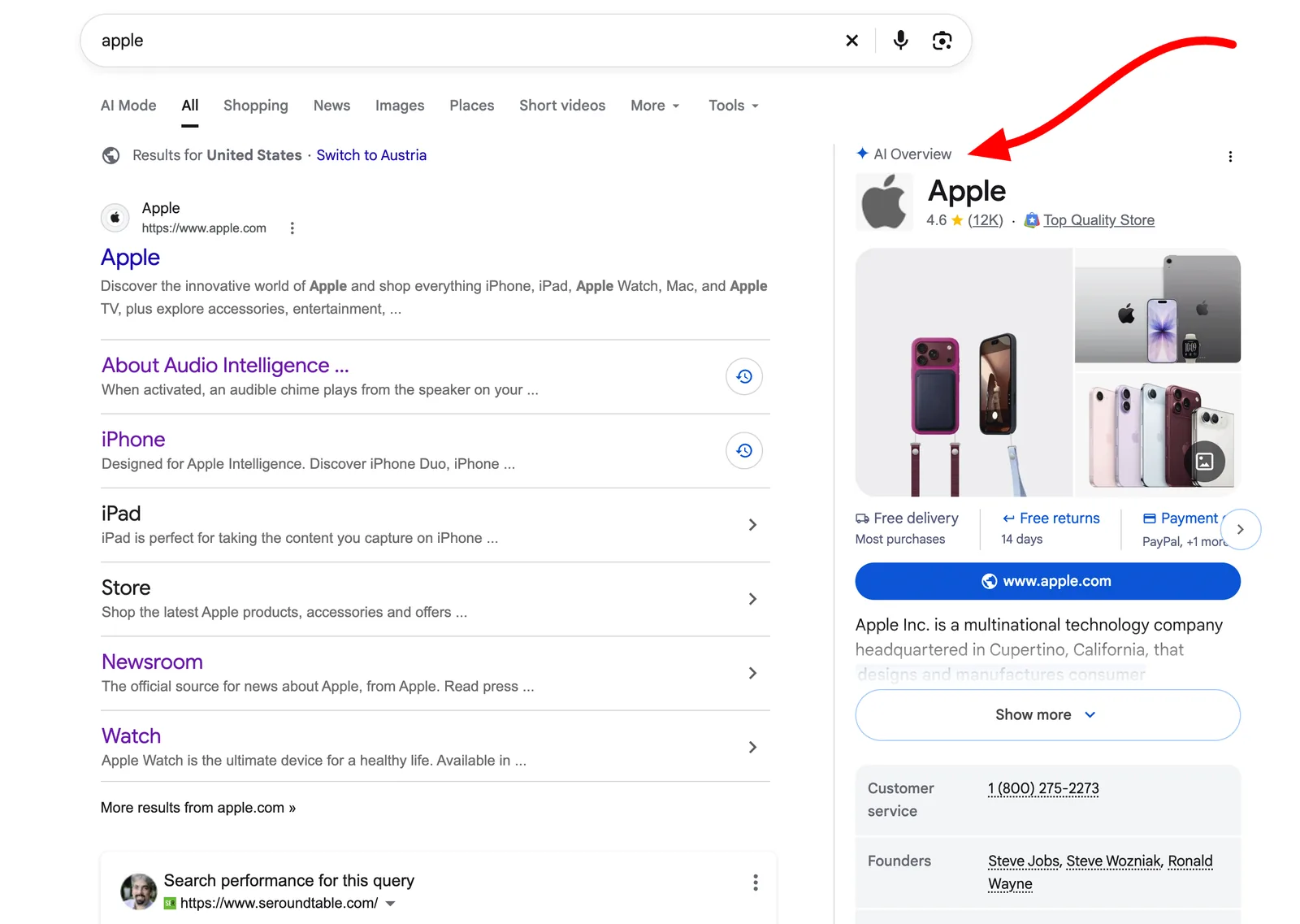
Image: Search Engine Roundtable
What happened: Search Engine Roundtable reported on 2 November that Google has moved AI Overviews for many brand searches into the right-hand column on desktop, where knowledge panels used to sit. Google hasn't announced it, and published examples are all from United States results. PPC Land spotted one panel giving two different founding years for the same company.
Source: Search Engine Roundtable · PPC Land
So what? Good news: your website gets the top of the main column back. The catch: the box beside it describing your company is written by a model using whatever sources it picks, often Wikipedia rather than your site. Your "about us" is being ghostwritten.
Do this: Search your brand and your top three competitors on desktop. Screenshot the panel, then fix the sources it leans on: your About page, Google Business Profile and any Wikipedia entry.
3. Google opens the door for brands to plug into Search and Gemini
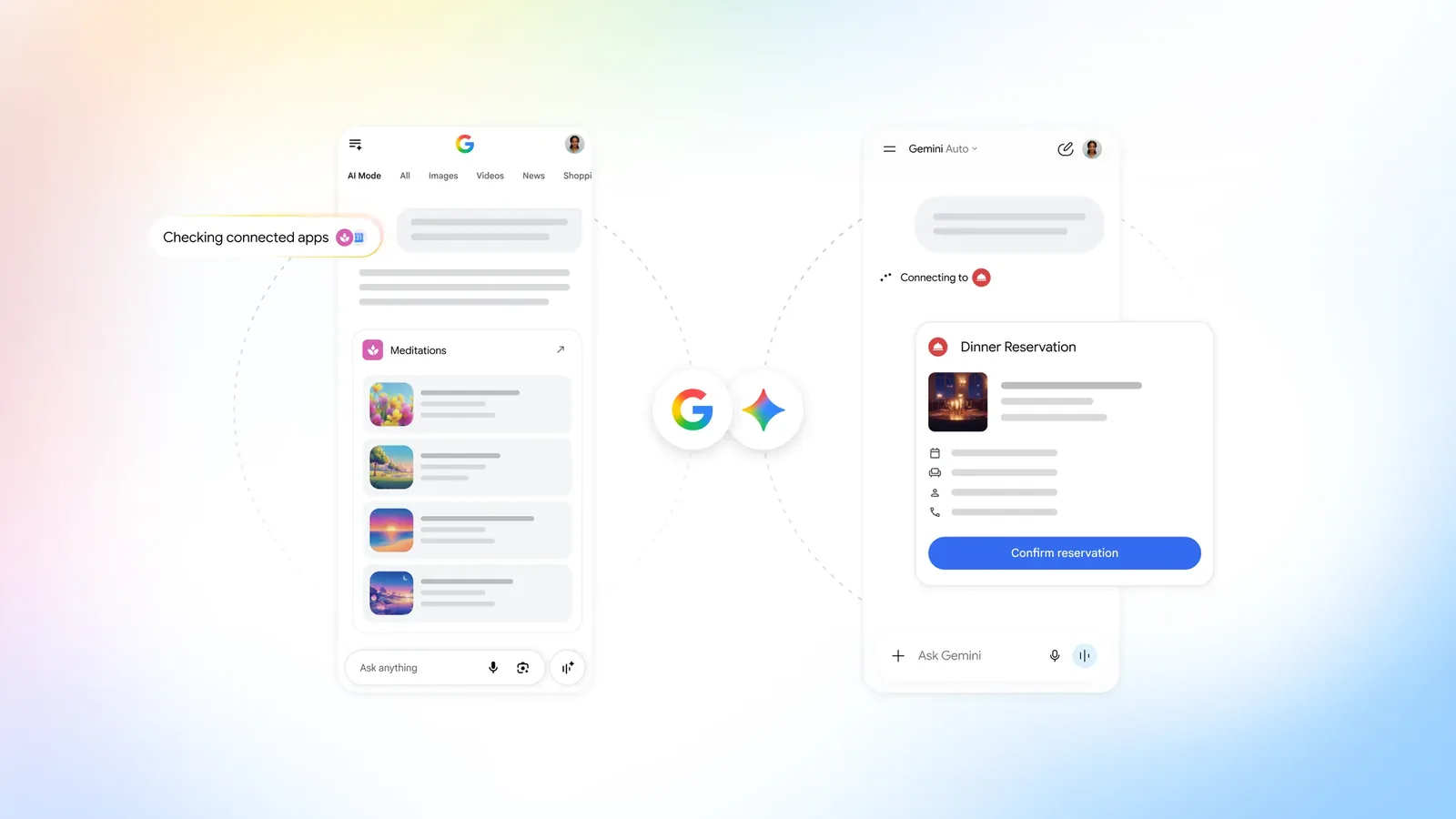
Image: Google
What happened: Google launched a preview of its Connected Apps Platform (28 October, US time). Developers build once on the Model Context Protocol (MCP), the open standard for connecting AI to outside tools, and choose whether their app goes live in Search, the Gemini app or both. Google says more than 50 Connected Apps are live, including Adobe, Calm, Experian and Peloton. Access opens in phases, with no word yet on markets, fees or how Google picks between competing apps.
So what? This is shelf space for the agent era. Instead of linking to your site, Google's AI can call your service directly: check stock, book, quote. And the Gemini app carries no ads, so a connected app is one of the few ways to appear inside it.
Do this: List the three things customers most often do on your site, and ask your developers what it would take to offer them as tools an AI can call.
4. Canva hits the reset button
Image: Canva newsroom
What happened: On 4 November Canva announced a restructure affecting about 1,270 roles, or 22% of its global workforce, through job cuts, changed roles or relocation. Co-founder and chief executive Melanie Perkins said growth had slowed for the first time in a decade. Canva cited "new technology" without naming AI, but TechCrunch reported it had cut its revenue growth forecast from 30% to 20% over ballooning AI costs, while chatbots now whip up posters and presentations.
Source: ABC News · TechCrunch
So what? First, thoughts with everyone affected. Two lessons for the rest of us: AI costs are a real line item, even for a company building its own models. And when a chatbot does "good enough" design for free, every specialist tool, agency and team has to prove its value above that line.
Do this: Before your next software renewal, check which paid features already live inside the AI assistant your team uses daily.
5. Australian businesses are spending big on AI, and few are seeing a return
Image: Cloudera
What happened: A Cloudera survey of 1,500 IT leaders, reported on 3 November, found 76% of Australian organisations invest at least US$500,000 a year in AI, but only 21% say it currently generates more value than it costs. Meanwhile, Westpac said AI tools sped up code conversion, testing and documentation on its St.George data warehouse migration, which cost about $35 million against a $70 million budget and finished over two years early.
So what? Westpac didn't "do AI". It picked one boring, expensive, well-defined job and measured the result in dollars. That's the gap between the 21% and everyone else. Marketing is full of jobs like that: reporting, product feeds, creative versioning.
Do this: Pick one AI use case, record today's cost and turnaround time, and check again in 90 days. No baseline, no business case.
6. ChatGPT moves from chatting to doing (and now makes GIFs)
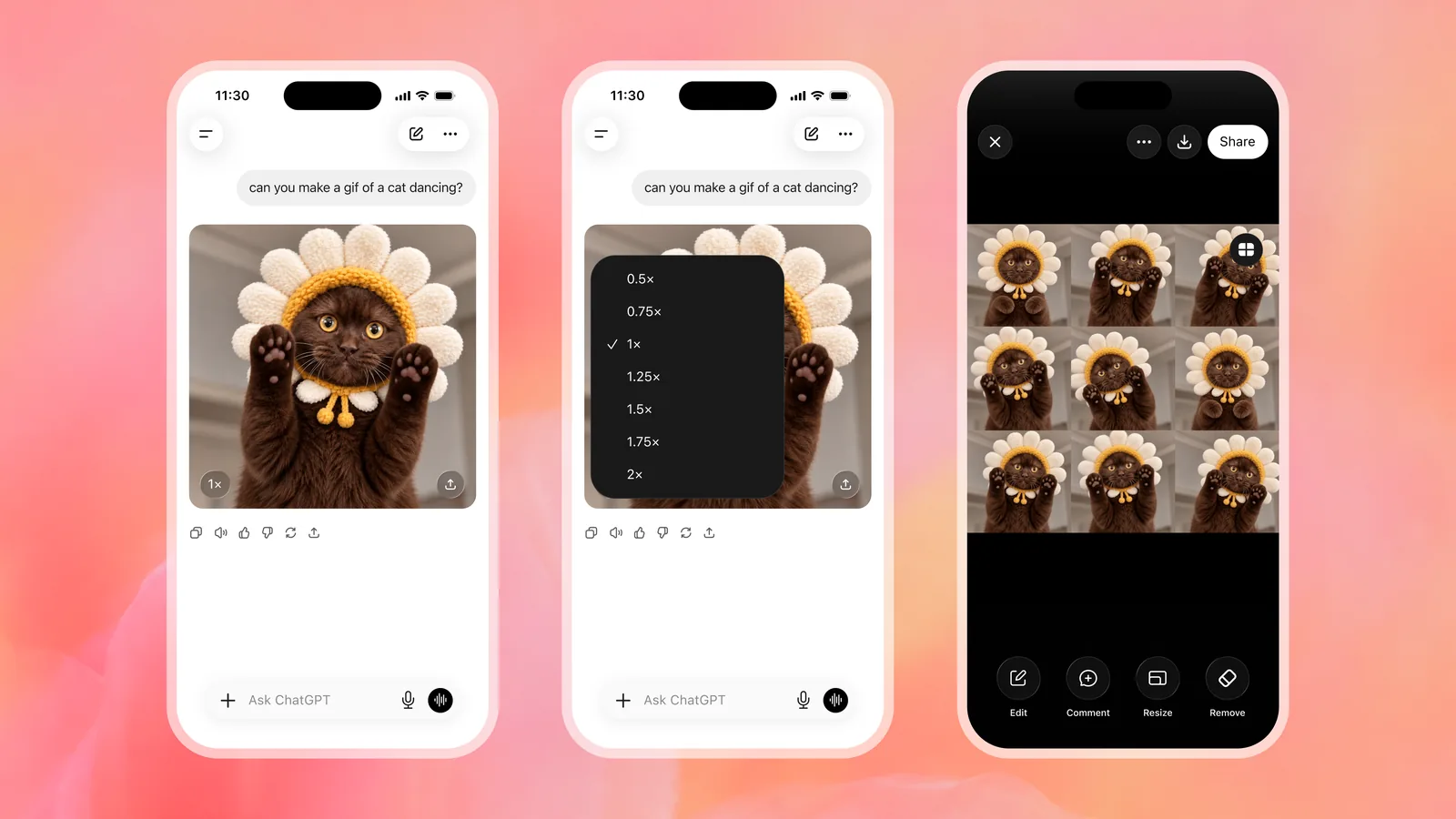
Image: OpenAI (via The Verge)
What happened: OpenAI told users it will merge ChatGPT's Chat and Work tabs, starting with a test group, so you can go from an idea to ChatGPT building a website, a presentation or doing tasks on the web, in one place. On 4 November it rolled out Images 2.6, adding animated GIFs from a prompt or photo. OpenAI says users now generate more than 4 billion images a week, up from 3 billion in September.
Source: TechCrunch · The Verge
So what? Your team's chatbot is becoming a production studio. When anyone can make animated social creative in minutes, volume stops being an edge. Brand consistency and sensible approvals become the edge.
Do this: Write a one-page brand prompt guide (colours, tone, words you never use) and make it the starting point for every AI-made asset.
Quick hits
- ChatGPT ads go programmatic: OpenAI has signed Magnite and PubMatic as buying partners, The Information reported. The Keyword
- Meta will count more sales from 12 November: a new Pixel setting, "Measure conversions on customer devices", is on by default. Benchmark Ads Manager against real orders now. Digital Ad Snack
- AI agents aren't shopping much yet: Uber said agents booked four rides and about 500 Uber Eats orders in Halloween week, out of roughly 320 million trips and orders. TechCrunch
- AI answers still get facts wrong: Forum AI found almost 40% of chatbot answers to United States election questions contained at least one factual error. Arab News (AFP)
- Duty of care, next stop the Senate: the Senate committee on the Digital Duty of Care Bill, which covers AI chatbots, reports on 20 November. Parliament of Australia
Phil's take: good intentions don't show up in the numbers
Every story this week comes back to one question: where does intent turn into revenue? ChatGPT ads catch people earlier, so they lose on last-click maths. Google is writing its own summary of your brand right beside your website. Agents can plug straight into Search, yet Uber says almost nobody books through them. And most Australian organisations can't show their AI spend paying for itself. None of that means slow down. It means measure properly. Know where your buyers are in their journey, judge each channel on the job it actually does, and make your brand the easiest one for a machine to understand and quote. For all intents and purposes, the experiment phase is over. Now AI has to earn its keep.
Until next week,
Phil CEO, Intender · Intent marketer
Want to know if your search, paid media and AI visibility are pulling in the same direction? Book a Fresh Eyes Audit and we'll show you where intent is leaking.